
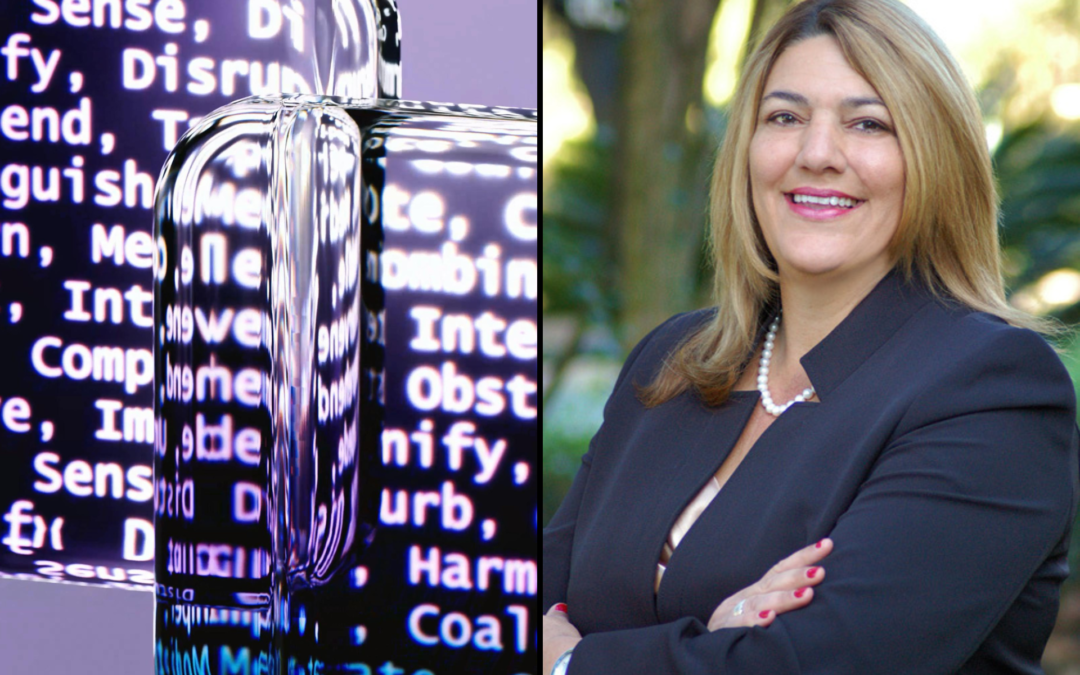
AI-Driven Future: Transforming Education for Tomorrow’s Workforce
By Madeline Pumariega, Miami Dade College
We are living in a world where Artificial Intelligence is profoundly influencing every aspect of our daily lives—from how we work to how we learn. As the greatest technological revolution of our time continues to unfold at an unprecedented pace, Miami Dade College is harnessing the transformative power of AI to reshape education and prepare the workforce of tomorrow through pioneering associate and bachelor’s programs that are making a significant impact in our community and beyond. Now recognized as the AI engine of Miami and a national leader, we are dedicated to continue achieving transformative results while supporting other colleges in their efforts to reshape education and cultivate skilled talent ready to thrive in a rapidly evolving landscape.
Stackable Credential Pathway Strengthens Talent Pipeline
Recognizing the urgency of workforce needs, the College is transforming the programs we offer by developing stackable credential pathways to expedite students’ entry into the AI field. In 2023, we launched Florida’s first Associate in Science in Applied AI, and a year later, this Fall 2024, the first Bachelor of Science in Applied Artificial Intelligence. This pioneering pathway is designed to accelerate the talent pipeline with a streamlined path from certificate to associate to bachelor’s degree. From the outset, students are immersed in the ethical dimensions of AI through a foundational course on AI and Ethics. This critical first step instills in every student a commitment to integrity and social responsibility.
Since launching the Associate in Applied AI, we’ve seen remarkable interest in AI courses During 2023-2024 academic year, notably, 60% of these students are 26 or older, and 24% are 41 or older, indicating that professionals from different points in their career recognize the growing significance of AI in their future paths. Accelerating our commitment to making AI accessible to all, our program also proudly boasts a 40% female representation. The AI stackable programs’ growth trajectory is promising, with enrollment expected to double this academic year.
Inspiring Faculty Development in AI
To harness the full potential of artificial intelligence in education, Miami Dade College recognizes that empowering our faculty is paramount. As we shift the culture to one that encourages everyone to be creators, rather than resistors of new technology, MDC launched the President’s Innovation Fund, which actively supports faculty in integrating AI into their teaching practices. To date, 22 faculty-led projects focusing on AI have been funded, reflecting a commitment to drive transformative change in our educational methodologies. These projects span a variety of disciplines; examples include enhancing marketing strategies with AI, reimagining the first-year college experience, and even developing hybrid AI models that transform math instruction.
Additionally, through the “Artificial Intelligence for All” project, funded by a grant from the National Science Foundation, the School of Engineering and Technology continually provides industry-based professional development for MDC faculty to develop and pilot AI courses and integrate AI into existing curricula. To date, over 750 full-time and adjunct faculty members have participated in AI workshops where they have received training to deepen their understanding and enhance their teaching approaches. Continuing to invest in professional development, MDC makes AI training a key part of onboarding and annual upskilling for all faculty to ensure the College remains at the forefront of AI integration across academic pathways.
Industry Partnerships Connect Talent to Opportunity
A key to fueling the pipeline of talent for the future of work is industry engagement, and through Miami Dade College’s Artificial Intelligence Business Industry Leadership Team (BILT), we are strengthening partnerships that expand real-world, work-based learning opportunities for our students. Formed with guidance from national AI experts, BILT has not only supported the development of Florida’s first undergraduate degrees in applied AI but has also laid the groundwork for active collaboration between MDC and industry leaders.
These partnerships are already creating impactful, hands-on learning experiences for students. For example, MDC students are working with Interport, a logistics company, to develop an AI model that provides the sales team with real-time quoting and estimating capabilities. With Visa, students are analyzing transaction datasets to build a fraud detection model that will flag suspicious transactions before processing. In collaboration with Miami-Dade County’s Department of Transportation and Public Works, students are also examining transportation data to identify system gaps and recommend improvements. As we expand our program, we look forward to continue forging even more partnerships that will expose our students to even more valuable work-based learning opportunities.
State-of-the-art AI Facilities Convene Community
At the core of our mission to create an AI workforce is the recognition of the importance of innovative spaces designed to train our students and engage our community. During the 2022–23 academic year, Miami Dade College inaugurated two state-of-the-art Artificial Intelligence Center facilities at two of our campuses which serve as the epicenter for engagement, curriculum-building, and collaboration.
As we work to further solidify our role as a hub for Miami’s local AI ecosystem, we are set to expand and open a third AI Center this academic year at another campus. Beyond academic functions, these centers are integral to connecting talent to industry and are becoming vital community spaces for AI enthusiasts and professionals alike. For example, hosting events like GPTuesdays, the AI Centers have emerged as a cornerstone convener uniting community members, students, faculty, and industry leaders to explore the latest advancements in AI and other emerging technologies.
Expanding AI Education Nationwide
As the first college in Florida to offer both associate and bachelor’s degrees in AI, Miami Dade College is proudly leading the vision and development of the AI technical workforce through the National Applied AI Consortium. This initiative, in partnership with Houston Community College and Maricopa County Community College District, has already received over $5 million in grants from the National Science Foundation (NSF) to empower community colleges nationwide to train the AI workforce.
The Consortium counts on the support of industry partners like Microsoft, AWS, Intel and Google. These companies are providing resources, funding, and curriculum to elevate the community college faculty’s capacity to teach AI. Additionally, the Consortium has established a National Business Industry Leadership Team to guide the direction of the AI programs based on the relevant skills required by industry and to develop the job descriptions of the new AI technical roles that our students will fill.
——————————————————–
While we have made significant progress, we recognize that the rapid evolution of AI requires us to remain agile and continuously align our programs with market demands. As we look to the future, our goal is to not only prepare our students with the skills necessary to excel in a dynamic landscape but to also cultivate a generation of ethical leaders and visionary thinkers who will go on to shape a workforce that drives innovation and societal progress.

Recent Comments