The Workforce Is the Classroom: How Colleges Must Redesign Learning for a Learner-First Economy

The Workforce Is the Classroom: How Colleges Must Redesign Learning for a Learner-First Economy

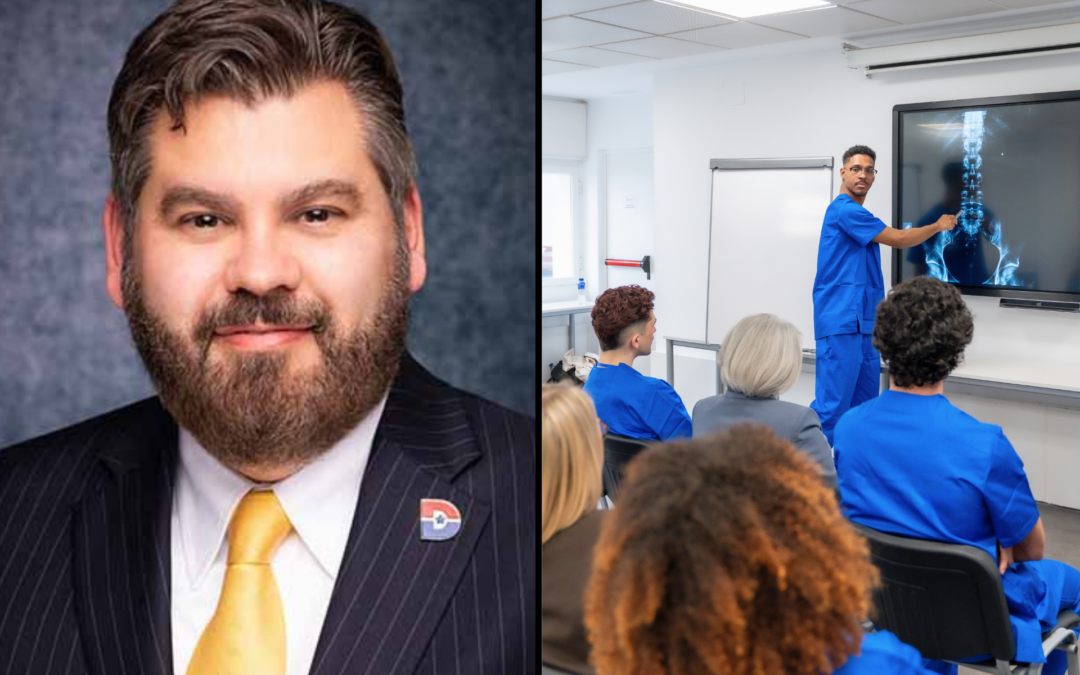
By Dr. Justin H. Lonon, Dallas College Chancellor

The Traditional Model Is No Longer Enough

The traditional classroom model is no longer enough to meet the demands of today’s workforce. 

At Dallas College, gone are the days of the classroom being confined to four walls. Students today need more than lectures and textbooks – they need real-world experience, industry connections, and confidence to lead. That’s why we’ve embedded workforce learning directly into our curriculum, transforming education into a launchpad for career success.

Dallas College sits at the intersection of education and industry, serving as a bridge to economic mobility for students and a workforce pipeline for employers. This guiding principle shapes every initiative we undertake. 

A Learner-First Workforce Model 

A learner-first workforce model means designing education around real-world application – where students don’t prepare for work, they do the work as part of their learning. 

From logistics and automation to entrepreneurship and health care, Dallas College students are solving real business challenges through hands-on projects, apprenticeships, and pitch competitions. By connecting education and industry, we ensure that students don’t just earn credentials; they gain the skills, confidence, and networks to thrive in a competitive job market.

Learning Through Real-World Experience 

At the inaugural Global Mission Summit, our students took center stage in the Global Mission Pitch Cup, presenting innovative solutions to real industry challenges while receiving mentorship from national business leaders. Similarly, our Start-Up Bootcamp equips students with the tools to launch and sustain businesses, fostering entrepreneurial thinking and leadership. 

These experiences are more than resume builders; they’re transformational. Students who engage in workplace learning are 25% more likely to secure full-time employment within six months of graduation. Paid internships boost first-year salaries by over $3,000 and significantly increase student confidence. 

Scaling Workforce-Aligned Learning

Since 2022, Dallas College has engaged 17,333 students in workplace learning, including:

  • 2,754 in clinicals
  • 6,069 in co-ops, internships, and practicums
  • 8,510 in apprenticeships

Through strategic partnerships with Workforce Solutions Greater Dallas and the Dallas Regional Chamber, we’ve launched 10 industry sector partnerships connecting students with employers in high-demand fields.

Our School of Manufacturing and Industrial Technology offers embedded co-op models and fast-track programs like FAME (Federation of Advanced Manufacturing Education) and SACA (Smart Automation Certification Alliance) certification, with 100% job placement. In Health Sciences, more than 4,300 students have participated in experiential learning supported by $5.7 million in federal funding. 

In our School of Education, 400 students have earned wages through paid work-based learning, including our K–12 teacher apprenticeship – the first of its kind in Texas.

These efforts have earned national recognition. Dallas College is the only Texas community college honored by the White House for scaling apprenticeships across 42 employer partnerships and 38 occupations.

Building the 22nd Century College

We’re proud of this progress, but we’re just getting started. Through our Outcomes Assessment Lab, we are tracking long-term job placement, wage growth, and employer satisfaction to ensure our graduates are not only hired but retained and thriving.

As we celebrate our 60th anniversary, we remain focused on building a 22nd Century College where every student earns a degree or credential, a network, and a clear path forward.

If we want a workforce that is ready to lead, we must design learning environments where students are already doing the work. At Dallas College, the workforce is the classroom, and that’s exactly the point.


When Tuition Assistance Stalled, SNHU Stepped In

When Tuition Assistance Stalled, SNHU Stepped In

When the federal government shut down in fall 2025, the disruption reached military students quickly. Tuition Assistance payments paused, leaving many service members unsure whether they could stay enrolled in their classes.

Southern New Hampshire University chose not to wait for the system. The university provided more than $1.3 million in scholarships so military students affected by the shutdown could continue their coursework without interruption.

For service members balancing deployments, training schedules, and family responsibilities, even a short funding gap can derail progress toward a degree. SNHU’s response ensured those students could keep moving forward.

A Model Designed for Military Learners

The decision reflects a broader strategy. SNHU has spent years building programs designed for working adults and military students whose lives rarely fit a traditional academic calendar.

Flexible online courses allow service members to continue their education through moves, deployments, and unpredictable schedules. That approach has helped the university grow into one of the largest nonprofit providers of higher education in the country, serving more than 200,000 learners.

Policy and Research on Military Education

SNHU has also been active in shaping policy discussions around military education. The university supported the bipartisan Military Learning for Credit Act, legislation aimed at helping service members translate military training and experience into college credit.

In November 2025, SNHU’s Center for Higher Education Policy and Practice released a report with the Today’s Student Coalition examining barriers military-connected learners face in higher education. The report calls for improvements in Tuition Assistance funding, stronger recognition of prior learning, and adjustments to GI Bill housing support.

Commitment in Practice

Higher education institutions often speak about supporting military students. Moments like the 2025 shutdown reveal what that commitment looks like in practice.

SNHU’s response was not a sweeping reform or a policy announcement. It was a practical decision that kept hundreds of service members enrolled and progressing toward their degrees.

For the students involved, the outcome was simple but significant: their education continued.

February CHIPS Update

February CHIPS Update

In a significant development for the CHIPS and Science Act implementation, on January 16th, the Department of Commerce announced preliminary funding agreements totaling approximately $246.4 million across four semiconductor companies. The proposed investments include:

  • $105 million for Analog Devices to expand facilities in Massachusetts, Oregon, and Washington
  • $79 million for Coherent’s silicon carbide substrate production in Pennsylvania
  • $10.3 million for IntelliEPI’s epitaxial wafer facility in Texas
  • $52.1 million for Sumika’s new ultra-high purity chemical plant in Texas

These investments aim to strengthen domestic semiconductor manufacturing capabilities, create approximately 1,190 new jobs across multiple states, and enhance the U.S. semiconductor supply chain. The initiatives span various critical areas including RF microwave systems, silicon carbide substrates, epitaxial wafers, and high-purity chemicals essential for chip production.

In another significant development, the Department of Commerce has finalized three new CHIPS Act awards totaling $143 million, along with a $75 million supplemental award to GlobalFoundries. The latest funding allocations include:

  • $32 million for Corning’s HPFS and ULE glass production expansion in Canton, New York
  • $18 million for Edwards Vacuum’s new semiconductor dry pump facility in Genesee County, New York
  • $93 million for Infinera’s photonic semiconductor manufacturing in San Jose, California and Bethlehem, Pennsylvania

These investments will create approximately 730 manufacturing jobs and 1,475 construction jobs across multiple states. The projects focus on critical components for semiconductor manufacturing, including lithography materials, vacuum pumps for fab operations, and photonic integrated circuits for data communications. The additional $75 million awarded to GlobalFoundries will support advanced packaging technology development at their Malta, New York facility.

The Presidents Forum continues to actively monitor and engage with CHIPS for America developments, recognizing the critical importance of semiconductor manufacturing to U.S. economic and national security interests. Through regular briefings and policy discussions, the Forum maintains close involvement with these initiatives, ensuring its members stay informed about funding allocations, implementation progress, and emerging opportunities in the semiconductor industry.

February Update

February Update

February Update

The February update focuses on High Social Value Education and key policy updates, emphasizing both individual success and community impact in higher education.

The big picture:

Presidents Forum is expanding its influence through:

  • New partnerships
  • Policy agenda development
  • Engagement with Department of Education leadership

Coming up:

  • Linda McMahon’s Education Secretary confirmation hearings (mid-February). Senate vote expected by early March
  • DC meeting on March 24-25