Presidents Forum outlines higher ed innovations for next POTUS

Presidents Forum outlines higher ed innovations for next POTUS

Why it matters

Higher Education has struggled to adapt to changing student demographics and needs, emerging technologies, and effective distance education options. The new presidential administration and department of education must energetically engage in practices that promote student success in the ever-changing higher education landscape.

Go deeper

Dr. David Andrews, chancellor of the University of Massachusetts and chairman of the Presidents Forum, and Dr. David Schejbal, president of Excelsior University, outlined eight important areas of focus to improve higher education and ensure the U.S. economy has the workforce required to remain a global leader:

  • Accessibility – Accessibility is about more than just affordability. The changing student population requires flexibility in the modality of their educational experiences.
  • Institutional Mergers and Acquisitions – The acquisition and merger process is drawn out and it limits an institution’s ability to provide a better student experience. The Department of Education must provide initial guidance on whether it views a proposed merger as a possibility or not.
  • Value-Added measurement in outcome metrics – Highly selective institutions will naturally see higher graduation and retention rates. The Department of Education must implement a value-added metric system to fairly evaluate open enrollment institutions.
  • Competency and output based adjustments – The regulatory environment was built focusing on inputs rather than outputs. Students should earn aid and credentials based on what they have learned, not how long they spent learning it.
  • Reauthorize the Higher Education Act with new focus points – The Higher Education Act, which was intended to be renewed every 5 years, has not been reauthorized since 2008. The new administration should prioritize a reauthorization that focuses on competency based evaluations and learning outcomes.
  • Data Sharing and Transparency – Promoting greater data sharing between institutions, state governments, and the federal government will allow for stronger analysis on student financial outcome data.
  • State Reciprocity Agreements – The near-unanimous agreement among 49 out of 50 states is a rare occurrence. NC-SARA has proven to be an effective agreement, warranting ongoing support and endorsement.
  • Recalibrate our understanding of a College Student – Adult students, working learners, and mid-career students are the new norm. These students require a different set of tools in order to help them succeed.

Data-Driven Revolution: Beth Akers on Reshaping Higher Education

Data-Driven Revolution: Beth Akers on Reshaping Higher Education

Data-Driven Revolution: Beth Akers on Reshaping Higher Education

Marty Carpenter: Having Accountability in Higher Education

by KSL Inside Sources

The big picture

Beth Akers, senior fellow at the American Enterprise Institute, discusses the critical role of data in improving higher education outcomes and decision-making.

Key takeaways

  • Data transparency is crucial: Akers emphasizes the need for comprehensive data on student outcomes to help prospective students make informed decisions about their education.
  • College Transparency Act: This proposed legislation aims to require colleges to collect and report detailed data on enrollment, completion rates, and post-college earnings.
  • Addressing “data blind spots”: Current limitations in higher education data make it difficult to assess if institutions are serving all students equitably.
  • Return on investment: Better data can help students evaluate the potential value of their college education and choose programs more likely to lead to successful outcomes.
  • Balancing privacy and transparency: Akers acknowledges the need to protect student privacy while advocating for increased data availability to improve educational outcomes.

What’s next

As debates around student loan forgiveness continue, the push for greater accountability and transparency in higher education is likely to gain momentum. The implementation of data-driven policies could significantly impact how students, families, and policymakers approach higher education decisions in the future.

WGU President Advocates for Accountability and Bold Reform

WGU President Advocates for Accountability and Bold Reform

WGU President Advocates for Accountability and Bold Reform

Why it matters

Higher education institutions need to be held accountable for student outcomes and embrace innovation to remain relevant and valuable.

The big picture

President Pulsipher emphasizes two main points:

  • Increasing accountability for outcomes: Institutions should prove their value by demonstrating how they improve students’ lives.
  • Encouraging innovation: Policies should incentivize new models that expand access, lower costs, and increase relevance to future work.

By the numbers

WGU measures its impact through the “Factor Graduate Return”:

  • Graduates see a median 26x return on their investment
  • Some programs yield over 50x return
  • Even lower-return programs in education see 12-15x returns

Between the lines

President Pulsipher argues that higher education should democratize opportunity, not stratify society further.

The bottom line

President Pulsipher argues that higher education should democratize opportunity, not stratify society further.

Delivering Lift

Delivering Lift

Delivering Lift

The big picture

UMass Global Chancellor David Andrews advises the Department of Education to focus on improving student outcomes and experiences while maintaining accountability.

Key Points

  • Challenge legacy metrics like seat time and Carnegie units
  • Rethink “regular and substantive interaction” for the on-demand learning era
  • Develop metrics that measure student growth or “lift” rather than raw outcomes
  • Implement real-time predictive analytics to support struggling students
  • Increase investment in innovation pilots, especially for working adult learners

The bottom line

The Department of Education should take more risks in piloting innovative approaches and work more collaboratively with accreditors to streamline processes and foster innovation.

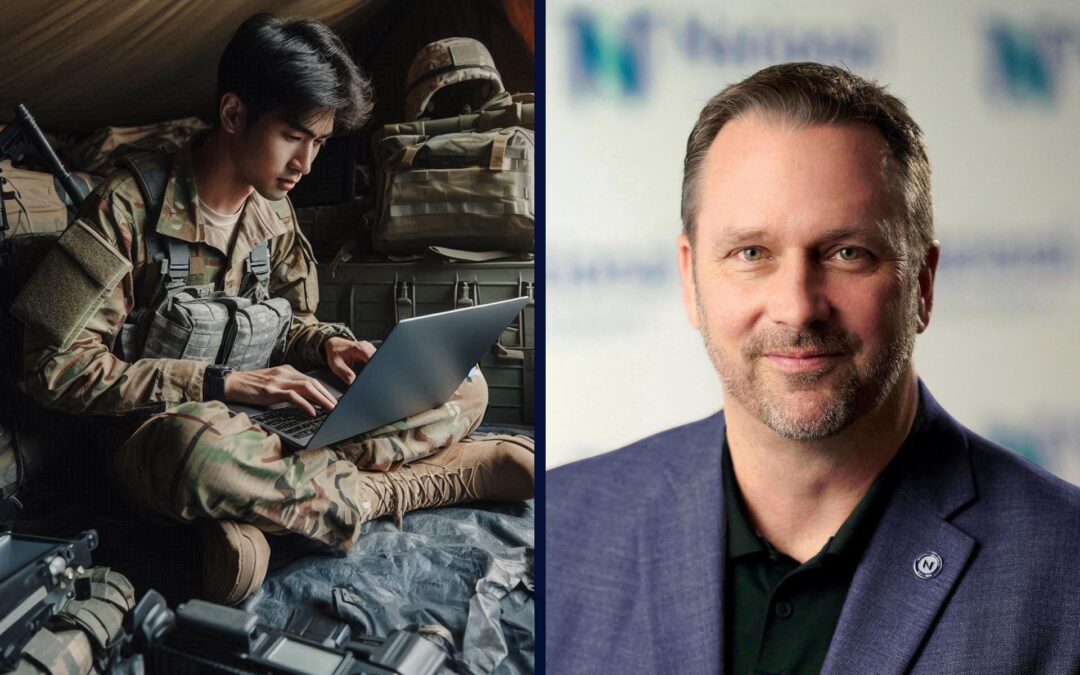
Why Improving Educational Benefits Is a Good Deal for the Military and Service Members

Why Improving Educational Benefits Is a Good Deal for the Military and Service Members

By Dr. Mark D. Milliron, National University

The nation’s population of college students is evolving rapidly, reflecting a broader spectrum of life experiences and responsibilities. Today’s learners are not only pursuing their degrees but are also balancing roles as parents, caregivers, and dedicated professionals. This shift is particularly evident in the growing number of military-affiliated students who are bringing their unique perspectives and experiences to higher education. 

At National University, where I serve as president, about one-fourth of our entire student body is military-affiliated, as are half of all National University undergraduate students. These learners are integrating their service backgrounds into their educational pursuits and enriching the campus environment in the process. Our institution was founded in 1971 by retired U.S. Navy Capt. Dr. David Chigos, who saw a need for more educational opportunities that support deployed soldiers and Veterans. Today, National University remains a top educator of the U.S. military.

Military educational benefits, especially tuition assistance, can be a powerful force that ensures Veterans can succeed in civilian life and infuse the nation’s workforce with a steady supply of experienced and disciplined talent. Yet for many military-affiliated students, military benefits are no longer such a good deal, as the buying power of military tuition assistance has diminished rapidly. Few military members are taking advantage of the program. And according to a recent report from Rand Corp., military transition programs aren’t living up to their promise of helping service members translate their military skills and experience to the civilian labor force.

Higher education should serve as a crucial bridge between military service and civilian employment. The United States has an obligation to support military members during and after their service. Enhancing and expanding the utilization of current tuition assistance programs can help service members gain more skills for their current roles and prepare them for their civilian careers.

For years education benefits have ranked among the top reasons for joining the military. But the Department of Defense’s Tuition Assistance program that provides financial aid to active-duty service members is capped at $250 per credit hour and at $4,500 per year. At that rate, a service member who relies solely on program support would need seven years to earn an associate’s degree. And while college tuition and fees have risen dramatically in recent years, the program’s annual cap has not been increased since its inception in 2001. 

Tuition assistance programs should provide enough funding so service members can earn a credential in a timely manner. Raising the cap to reflect the true cost of higher education is a simple and long-overdue fix.

Current funding levels for military education benefits are creating challenges for both service members and the institutions that serve them. Participation in the tuition assistance program has grown less cost-effective over time; indeed, a growing number of institutions are opting out because they no longer have the resources to sustain their support for active-duty service members. More ominously, the Army might follow the lead of other branches, which cut education benefits during and after the COVID-19 pandemic. 

Lawmakers should increase funding to the Defense Department’s education benefits so it can serve current students more effectively and encourage more service members to participate. Even a significant increase in tuition assistance would constitute just a small fraction of the Defense Department’s overall $850 billion budget request.

Finally, a 2017 Rand study found something surprising: Less than a quarter of new recruits were aware of the education benefits available to them. In addition, only about 20% of service members currently use tuition assistance. 

As the tuition assistance program is modernized and improved, military leaders, policymakers and postsecondary institutions must ensure that more recruits and service members learn about this program and are motivated by the educational opportunities the military can provide.

To deal effectively with escalating global tensions, the U.S. must redouble its efforts to build and maintain a capable military. Improving tuition assistance and other education benefits can help our armed forces maneuver through a challenging recruitment landscape and invest in the futures of our service members.


The Imperative of Skills Acquisition in Higher Education: A Call to Action

The Imperative of Skills Acquisition in Higher Education: A Call to Action

By Gregory W. Fowler, PhD

Today’s rapidly evolving job market makes new demands of higher education, as learners turn to shorter, just-in-time learning experiences—flexible, stackable, and cost effective—to build skillsets explicitly tailored to their professional objectives. It is critical that lawmakers move to support and empower institutions that recognize and embrace this worldview, removing obstacles that impede efforts to recognize, standardize, and validate learning experiences that prioritize skills acquisition.

Gone are the days when skills-based learning was synonymous with vocational training or viewed as a reductive approach to learning. Today, rapid advances in technology demand flexibility, agility, and adaptability, and employers are increasingly likely to value practical over theoretical knowledge. Instead of automatically equating a traditional credential with competence or mastery, employers and learners alike are placing greater emphasis on an individual’s ability to demonstrate and acquire necessary skills.

Fundamental shifts are needed in postsecondary learning if we are to prepare a workforce capable of thriving in the 21st century, and institutions must be prepared to provide necessary knowledge and skills, assess and validate them, and communicate them in ways that are meaningful to both learners and prospective employers. This offers the new administration an opportunity to make an immediate and lasting economic impact across large and often underserved populations, including those who seek credit for prior learning; those with some college and no degree; displaced workers who are reentering the workforce, upskilling, or changing careers; learners in the military; and millions more. 

These learners ask for and expect stackable certificates, certifications, or micro-credentials that can be evaluated and easily refreshed. They demand assurances that the skills they seek will have value in the future, and that they can be updated and augmented in response to emerging trends or technologies.

In response, my own institution—University of Maryland Global Campus (UMGC)—has embraced skills as the foundation of our learning experiences. This includes taking deliberate steps to identify and name the skills we teach in our core products and mapping those skills to career paths.

It also involves embracing a worldview that values learning no matter where it happens. We pride ourselves on being the nation’s most transfer-friendly institution, accepting credit from a wide variety of learning providers, and we evaluate and grant credit for prior learning, whether it is gained on the job or in military training or demonstrated via assessments.

This approach is one that we have identified and embraced as vital for the continued relevance of our institution and, indeed, of postsecondary learning, but it comes with challenges, and again, offers lawmakers the opportunity to support real and impactful change in the lives of learners everywhere.

Several steps can be taken to support the transition currently underway.

  • First, skills-focused learning experiences are built around different measures of success, and the federal government can empower recognized accreditors to include standards that are applicable to skills-based programs. This could also encourage greater acceptance of short-form learning experiences, reducing the focus on credit and contact hours as the main criteria for federal financial aid eligibility.

  • Equally important, by incentivizing and recognizing partnerships with industry leaders and employers, lawmakers can encourage the development of curricula that align with current and projected job market demands while supporting and rewarding those employers who invest in workforce and career development, thus contributing to an agile and competitive workforce. (Simply increasing the $5,250 cap on untaxed educational benefits—in place since 1986—would support such investment.)

  • Finally, by voicing support for and spotlighting innovative teaching methods and learning environments that facilitate skills acquisition—such as project-based learning, internships, and collaboration with industry partners—lawmakers can underscore and promote the value of skills-based learning and accelerate its acceptance in mainstream learning and work environments.

In short, by recognizing, validating, and legitimizing skills acquisition as a central goal of education, the federal government can take crucial steps toward growing a workforce positioned to meet the demands of the modern economy. Similarly, by supporting postsecondary providers that embrace this approach, lawmakers can ensure that students are equipped with the skills they need to succeed in their careers and contribute to our nation’s prosperity. This shift will require cooperation among policymakers, educators, industry leaders, and third-party providers, and by supporting it, the new administration can affect lasting and impactful change that yields greater socioeconomic mobility and economic growth.