
Competition is an Illusion: How Higher Ed Partnerships Can Increase Access to Online Learning – Sooner than Later
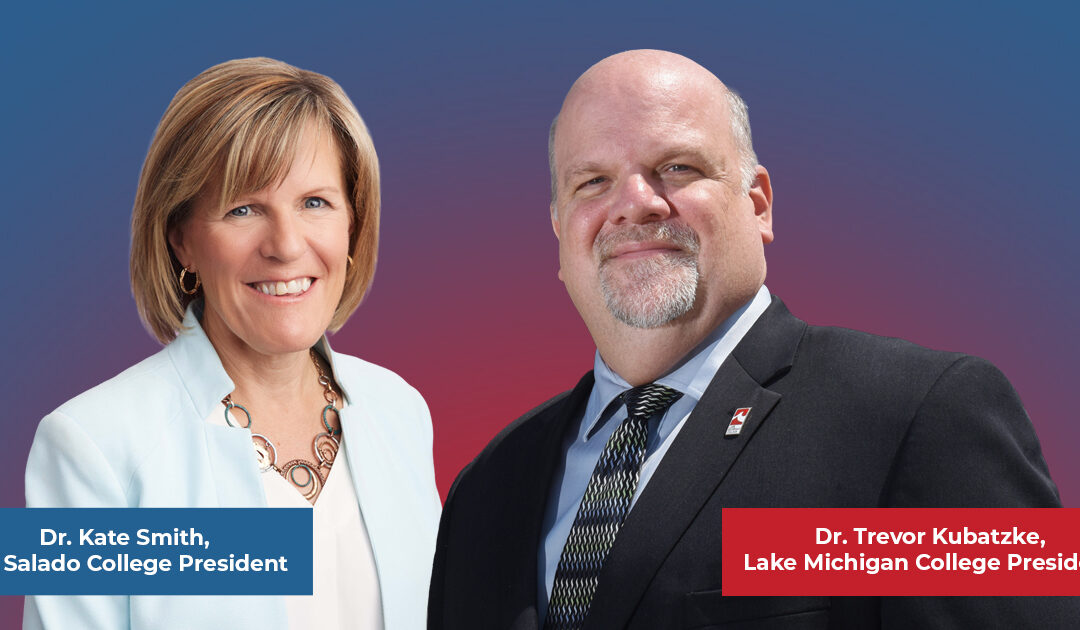
By Kate Smith, president of Rio Salado College, and Trevor Kubatzke, president of Lake Michigan College
The demand for online learning has surged in the last 5 years; however, many colleges are struggling to keep pace. According to a 2025 Changing Landscape of Online Education (CHLOE 10) Report and forbes.com analysis, nearly 9 in 10 colleges plan to expand online offerings but many do not have the technology, funding, faculty readiness, and other critical structures in place to make the transition fast enough to meet learner demands.
Lake Michigan College (LMC) and Rio Salado College presidents came up with a solution that’s been working since 2022 – a partnership agreement that gives LMC students the option to complete some courses online with Rio Salado.
The partnership, which is the first of its kind in the country, resulted from a conversation between LMC’s President Trevor A. Kubatzke and Rio Salado’s President Kate Smith during an Alliance for Innovation and Transformation conference a few years ago.
The outcome — LMC was able to enhance its offerings and provide online learning options to its 3,300 students without the logistical barriers or expense of expanding instructional development, staffing courses, or integrating an online platform.
LMC students enrolled in 174 Rio Salado class seats last academic year, which were previously unavailable to them in an online modality.
“This is a model of mutual support, not competition,” said President Smith. “When students win – we all win.”
LMC serves as the home institution, providing academic advising, enrollment support, and degree credit for courses completed through Rio Salado. LMC students pay in-district tuition rates, not out-of-state tuition.
“At Lake Michigan College, our commitment is to remove every barrier that stands between our students and their goals,” said President Kubatzke. “This partnership with Rio Salado College does exactly that. By allowing our students to access specialized courses at our domestic tuition rate, we’re expanding what a Lake Michigan College education can look like without asking students to sacrifice affordability. This is what it means to put students first.”
Current offerings include American Sign Language, French, Arabic, Chinese, and Insurance courses, as well as courses to complete an Advanced Certificate in Cybersecurity.
Students can access the expanded catalog through LMC’s advising process and seamlessly enroll in Rio Salado courses as part of their academic plan, supported by advisors at their home campus who help them navigate which courses transfer and apply toward graduation requirements.
A streamlined payment processing structure supports a smooth transition for students, as does LMC’s robust Student Information System, which enables efficient data exchange and supports timely administrative processes. Equally important, is the consistent engagement of faculty and administration from both colleges, who are committed to working in a spirit of collaboration.
The investment has paid off for both colleges, increasing enrollments and opportunities for new course offerings to meet other student interests.
“Innovation at Rio Salado College has always been rooted in increasing access to higher learning and student success, especially by way of partnerships,” said President Smith. “Our growing partnership with Lake Michigan College demonstrates what’s possible when institutions lean into collaboration with a common goal. By sharing our online expertise and specialized courses, we’re not just expanding catalogs — we’re expanding opportunity. Together, we’re building a model where resources are maximized, and students are empowered to reach their goals in ways that fit their lives.”

Recent Comments