
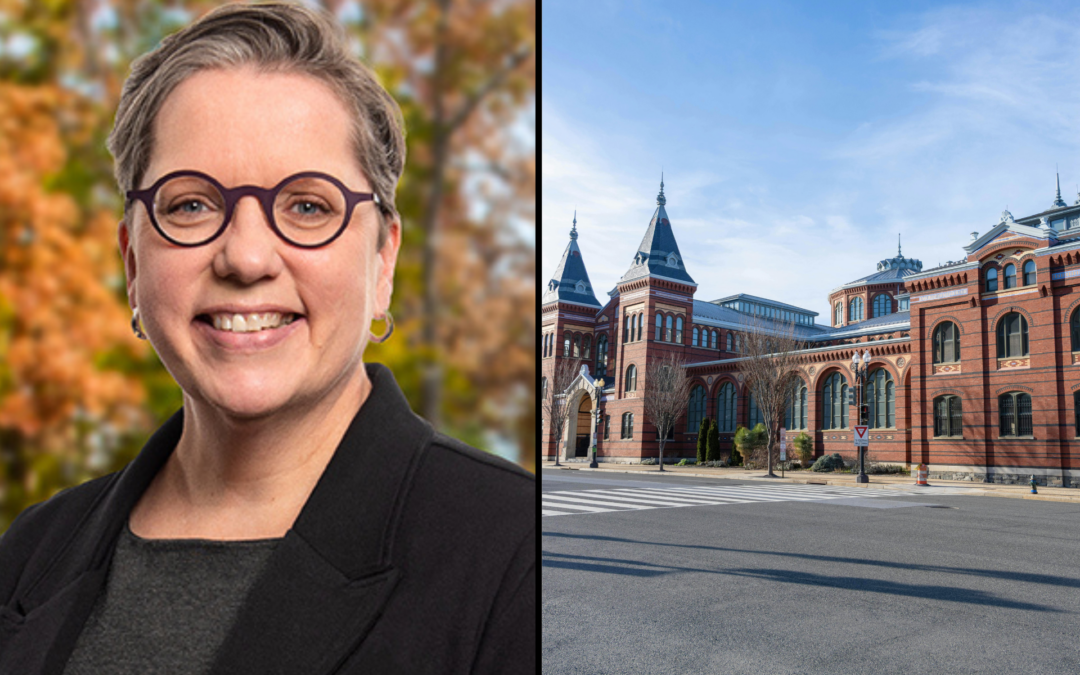
By Anne M. Kress, President, Northern Virginia Community College
Higher education leaders and policymakers could be forgiven for making AI the center of every conversation about preparing students for a world of work changing at record speed. The numbers are striking: a Lightcast study found that one-third of the skills required for the average job changed between 2021 and 2024. A LinkedIn executive observed in a May 2025 New York Times opinion piece that AI was breaking the bottom rung of the career ladder — the entry-level roles where generations of young workers got their start—and that was a year ago.
AI deserves our attention. But it isn’t the only issue that does.
At Northern Virginia Community College (NOVA), we hear consistently from students and employers that career-connected learning is often the difference between a graduate who gets hired and one who doesn’t. Students pursuing IT and engineering at NOVA already benefit from that connection: internships and apprenticeships with partners like Micron, Digital Realty, Microsoft, and AWS, plus the opportunity to earn employer-valued credentials on the path to their certificates and degrees. These opportunities build careers.
They also build the durable skills that employers – not just in STEM fields – say they need in their early-career workers. A study last year by Presidents Forum member Western Governor’s University and UpSkill America defined durable skills as the “enduring skills that are not job/role specific but are valued across all roles and workplaces (teamwork/collaboration, active listening, communication, etc.).” It also noted a prevailing belief among employers that skills needed to succeed on Day One of a job (trustworthiness, attention to detail, collaboration, integrity) are critical – and gained through real-world experience rather than academic instruction.
How do we equip students, regardless of discipline, with the durable skills needed to thrive in today’s whirlwind workplace?
In fall 2022, more than 44,000 students were enrolled in liberal arts courses across nearly 2,000 sections at NOVA. With support from the Jack, Joseph and Morton Mandel Foundation and partners in the business community, NOVA launched an initiative to expand our career-readiness infrastructure to these students. The result is a two-part model: a micro-credential program that makes the skills embedded in a humanities education visible and verifiable to employers, and a micro-internship program that puts those skills to work in real professional settings.
We started, as we always do, by asking employers what they actually need and value. We convened a group of 40 professionals working in humanities-adjacent fields and posed a direct question: What does an emerging professional need to succeed? Over eight weeks of structured discussion, faculty synthesized employers’ responses into five defining characteristics: workplace humility, adaptability, a willingness to learn, strong communication, and technical fluency. Those conversations became the foundation of a micro-credential program comprising 24 digital badges across three pathways — Critical Thinking, Communication Skills, and Leadership. These are employer-informed markers of specific, validated competencies — designed from the outset for college-wide adoption, so any NOVA student, regardless of discipline, can build and demonstrate these skills.
The micro-internship program grounds those credentials in real experience. These are short-term, project-based, remote or hybrid engagements that fit the realities of students’ schedules: over 70% of NOVA students are part-time, juggling classes, jobs, and caregiving, so we wanted the micro-internships to be accessible and achievable. We also wanted the students’ work to be consequential. NOVA students helped Smithsonian curators sort through a newly acquired collection of 19th century postcards. Others analyzed truancy data for a Chatham County judge, created content celebrating the Alexandria Film Festival’s 20th anniversary, and documented campus life for NOVA’s marketing office. These micro-internships are not simulations. They are real projects, for real organizations — exactly the experiences that help a student walk into a job interview and say, with evidence, what they can do.
The skills these students develop — synthesis, communication, ethical reasoning, adaptability — are hardest to automate and most valuable in a world reshaped by AI. Thanks to funding from the Mandel Foundation, NOVA has been able to build the infrastructure that supports the development and demonstration of these skills. Through this project we have learned that our students are ready and their prospective employers are willing. The only question is whether more higher education institutions can follow NOVA’s lead and meet them both halfway.
Recent Comments